


When it comes to enhancing the look and feel of your home, rendering and plastering are two essential techniques that can make a significant impact. While both involve applying a mixture to surfaces, they serve different purposes and are used in different contexts.
Understanding the difference between rendering and plastering is crucial, whether you’re renovating your home or repairing damaged walls.
In the most simple terms, the difference between rendering and plastering is that rendering is the process of coating external walls and plastering is for internal walls. In this guide, we will go into more detail about both techniques and the different types available starting with rendering.
Rendering is a process used to coat the exterior surfaces of buildings, primarily to protect them from wind, rain and other environmental factors. The material used in rendering typically includes a mixture of cement, sand, and water, though additional elements like lime or synthetic resins may be added depending on the desired finish and durability.
Rendering serves not only as a protective layer but also as an aesthetic enhancement. It allows homeowners to achieve various finishes, from smooth and sleek to textured and rustic, depending on the application technique and the materials used. Some of the most popular finishes include pebble dash, smooth render, and textured patterns, each offering a different visual appeal.
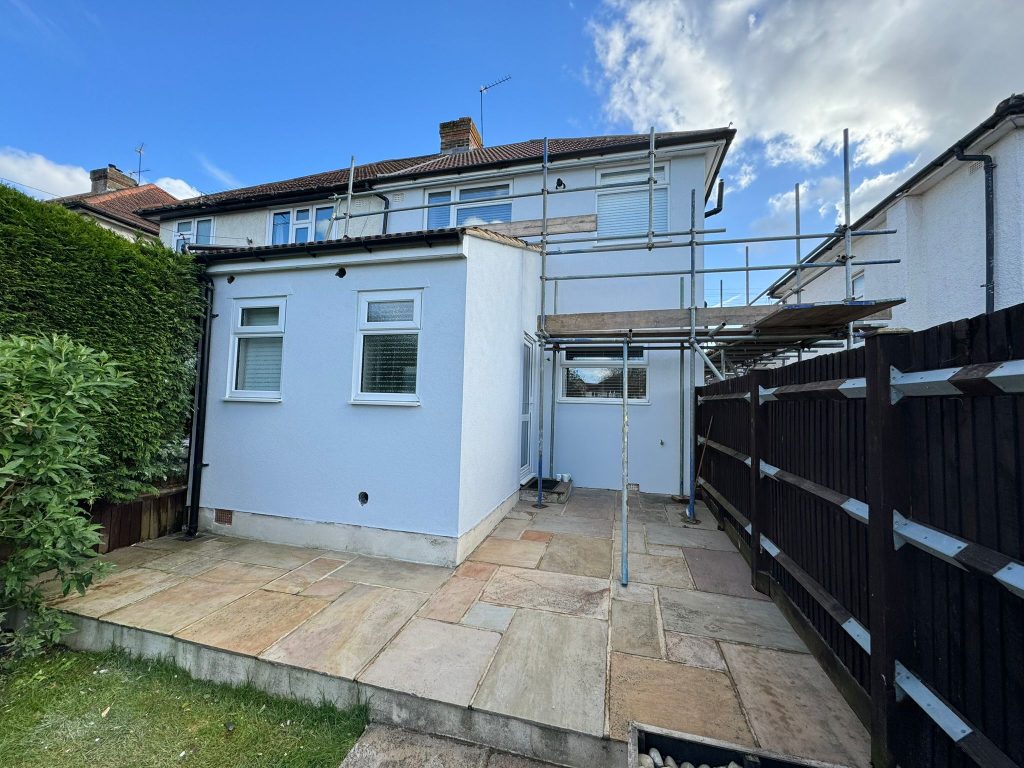
Rendering offers a range of options depending on the desired finish and the specific requirements of the building. Each type of render has unique properties that make it suitable for different situations, from traditional looks to modern, high-performance finishes.
Cement render is one of the most commonly used types of render, known for its strength and durability. It consists of a mix of cement, sand, and water, and is often applied in multiple layers to achieve a solid, long-lasting finish. Cement render can be textured or smoothed, depending on the aesthetic you’re aiming for. It’s an excellent choice for protecting exterior walls from the elements, but it does require regular maintenance, such as repainting, to keep it looking fresh.
Acrylic render incorporates acrylic, a type of plastic, into the traditional cement render mix. This addition gives the render greater flexibility, reducing the risk of cracking over time. Acrylic render is known for its quick drying time and is available in a variety of textures and colours, making it a popular choice for modern homes. It can be applied over most surfaces, including previously rendered walls, offering a versatile option for both new builds and renovations.
Silicone render is a high-performance option that combines the flexibility of acrylic with the added benefit of being highly water-repellent. This makes it particularly suitable for buildings in areas with high rainfall or humidity. Silicone render is also self-cleaning, as dirt and debris are less likely to adhere to its surface, helping to maintain a clean appearance with minimal upkeep. Its advanced formulation provides long-lasting protection while offering a sleek, contemporary finish.
Lime render is a traditional option that has been used for centuries, especially in historic and period properties. It’s made from lime, sand, and water, and is known for its breathability and flexibility, which help to manage moisture within walls. Lime render allows the building to “breathe,” preventing issues like damp and decay in older structures. It has a distinctive, natural finish that is often sought after for restoration projects or to complement the character of older buildings.
Monocouche render is a modern, single-layer render that provides both protection and decoration in one application. It’s available in a wide range of colours, eliminating the need for painting, and it’s designed to be applied in a single coat, reducing labour time. Monocouche render is typically composed of cement and lime, offering a durable and attractive finish that is also low-maintenance. Its popularity has grown in recent years due to its efficiency and the variety of finishes it can achieve.
Plastering is the technique used to coat the interior walls and ceilings of a building, providing a smooth and even surface that is ready for painting or wallpapering. Unlike rendering, which is designed to withstand the elements, plastering focuses on creating a decorative finish that enhances the aesthetic of indoor spaces. The plaster mixture typically consists of gypsum, lime, or cement, combined with water to form a workable paste.
The primary goal of plastering is to achieve a flawless interior finish that hides any imperfections in the underlying wall, ceiling structure or to cover up any accidents such as a foot through the ceiling or an overexcited child like the example below! It not only improves the visual appeal of a room but also contributes to the durability and insulation of the walls.


Just as rendering offers various options for exterior finishes, plastering presents several choices tailored to different interior applications. Each type of plaster has its own characteristics, making it suitable for specific environments and finishes.
Gypsum plaster is the most widely used plaster for interior walls and ceilings due to its smooth finish and ease of application. It consists of gypsum, a naturally occurring mineral, which is mixed with water to form a paste that hardens quickly. Gypsum plaster is prized for its ability to create a perfectly smooth surface that is ideal for painting or wallpapering. It also provides good thermal insulation and is fire-resistant, making it a practical choice for most rooms in a home. This type of plaster is used on nearly all of our plastering projects.
Lime plaster has been used for centuries and remains a popular choice for older buildings or those requiring breathability. Composed of lime, sand, and water, lime plaster is more flexible than gypsum plaster, which allows it to accommodate slight movements in the building structure without cracking. This flexibility makes it particularly suitable for heritage properties or areas with significant humidity, as it helps to manage moisture and prevent damp issues. Lime plaster also has a unique, slightly textured finish that adds character to interiors, especially in period homes.
Cement plaster is a more robust option that combines cement, sand, and water. It is generally used in areas where extra strength is needed, such as kitchens, bathrooms, or utility rooms. Cement plaster is more resistant to impact and moisture than gypsum or lime plasters, making it ideal for spaces that endure more wear and tear. While it doesn’t offer the same smooth finish as gypsum plaster, it provides a durable surface that can be painted or tiled over.
Magnetic plaster is a modern and innovative type of plaster that incorporates magnetic particles into a traditional plaster mix. This allows the finished wall to function as a magnetic surface turning any wall into a functional space for attaching notes, pictures, or even lightweight shelves without the need for nails or adhesives.
The application process for magnetic plaster is similar to that of standard plaster, but it requires careful handling to ensure the magnetic particles are evenly distributed throughout the surface.
Once applied, it provides a smooth finish that can be painted over, just like any other plaster. This type of plaster is particularly popular in children’s rooms, kitchens, and offices where interactive walls can enhance the space’s functionality.
At Prestige Property Solutions, we understand that every home is unique, and so are its needs. Whether you’re looking to protect your exterior walls with high-quality rendering or seeking to achieve a flawless interior finish through expert plastering, our team is here to guide you.
We take pride in offering personalised advice and services tailored to the specific requirements of your property. Our experienced professionals will assess your space, listen to your requirements, and recommend the best approach to achieve the results you desire.
With our commitment to excellence and attention to detail, you can trust that your project will be handled with the utmost care and professionalism.
Whether you have a clear vision or need expert guidance, we’re ready to help you bring your project to life, give us a call today to discuss.
In this guide, we’ve explored the distinct roles that rendering and plastering play in enhancing both the functionality and appearance of your home.
Rendering focuses on exterior protection and durability while plastering is crucial for creating a smooth, flawless finish inside your home.
At Prestige Property Solutions, we’re here to ensure that your home gets the expert treatment it deserves, delivering results that not only meet but exceed your expectations.
If you’re ready to start your project or simply need more information, don’t hesitate to reach out today.
We’re here to help you make the best choice for your home, ensuring that every detail is taken care of with the highest level of professionalism and care.
